
Can You Pay Yourself a Salary From Your Own Business?
Starting a business comes with an oddly practical problem that nobody talks about enough: at some point, the business starts making money, and you need to figure out how you're supposed to pay yourself.
If you're the founder, the owner, the person signing the documents and the person doing half the work, it can feel obvious that the money in the business should simply become your money.
It doesn't quite work that way.
How you take money out of the business depends on the structure you've chosen, and this is one area where LLPs and Private Limited companies work differently.
Private Limited Company: Salary Is Possible, But It Is Still Company Money
A Private Limited company is a separate legal entity. The money sitting in its bank account belongs to the company, not automatically to its shareholders or directors.
A founder who also works for the company can receive remuneration or salary, subject to the applicable company-law requirements and the terms of their appointment. The company may also need to account for tax withholding and payroll-related obligations when making those payments.
That means you shouldn't simply transfer ₹1 lakh from the company's bank account to your personal account whenever you need it and call it your salary.
There should be a proper basis for the payment, with the necessary approvals, records and tax treatment in place.
LLP: It Works Differently
In an LLP, the relationship is different because you're a partner rather than an employee of the LLP in the same way a director-employee relationship may operate in a company.
Partner remuneration, interest on capital and profit sharing can all come into the picture, depending on the LLP agreement and applicable tax rules. So when an LLP partner asks, “Can I pay myself a salary?”, the more accurate answer is: you can receive remuneration from the LLP, but it isn't simply the same thing as putting yourself on the company's payroll.
That's an important distinction because the way the payment is structured affects how it is recorded and taxed.
The Simple Way to Think About It
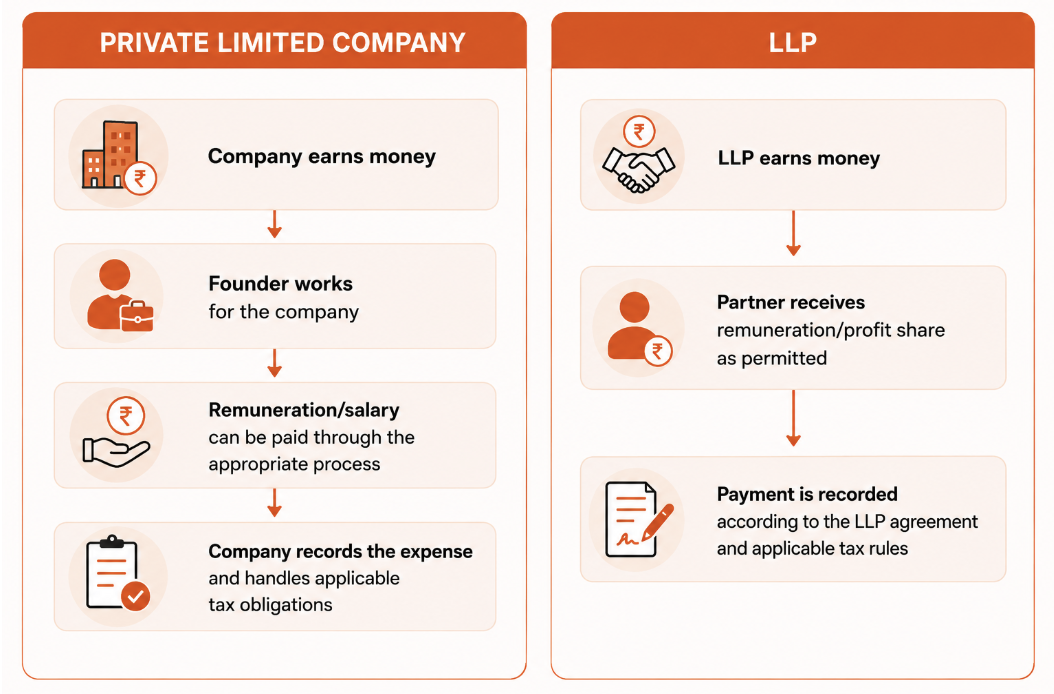
The biggest mistake is treating the business bank account like a personal wallet. Whether you're running an LLP or a Private Limited company, the money needs to move for a reason that can be properly recorded.
And if you're wondering whether you should be taking a salary, partner remuneration, drawings, or simply receiving profits, that's exactly the point where getting your CA involved is worth it. The right answer depends on your structure, your agreement, your role in the business and the applicable tax treatment—not just on how much money you want to take home.