
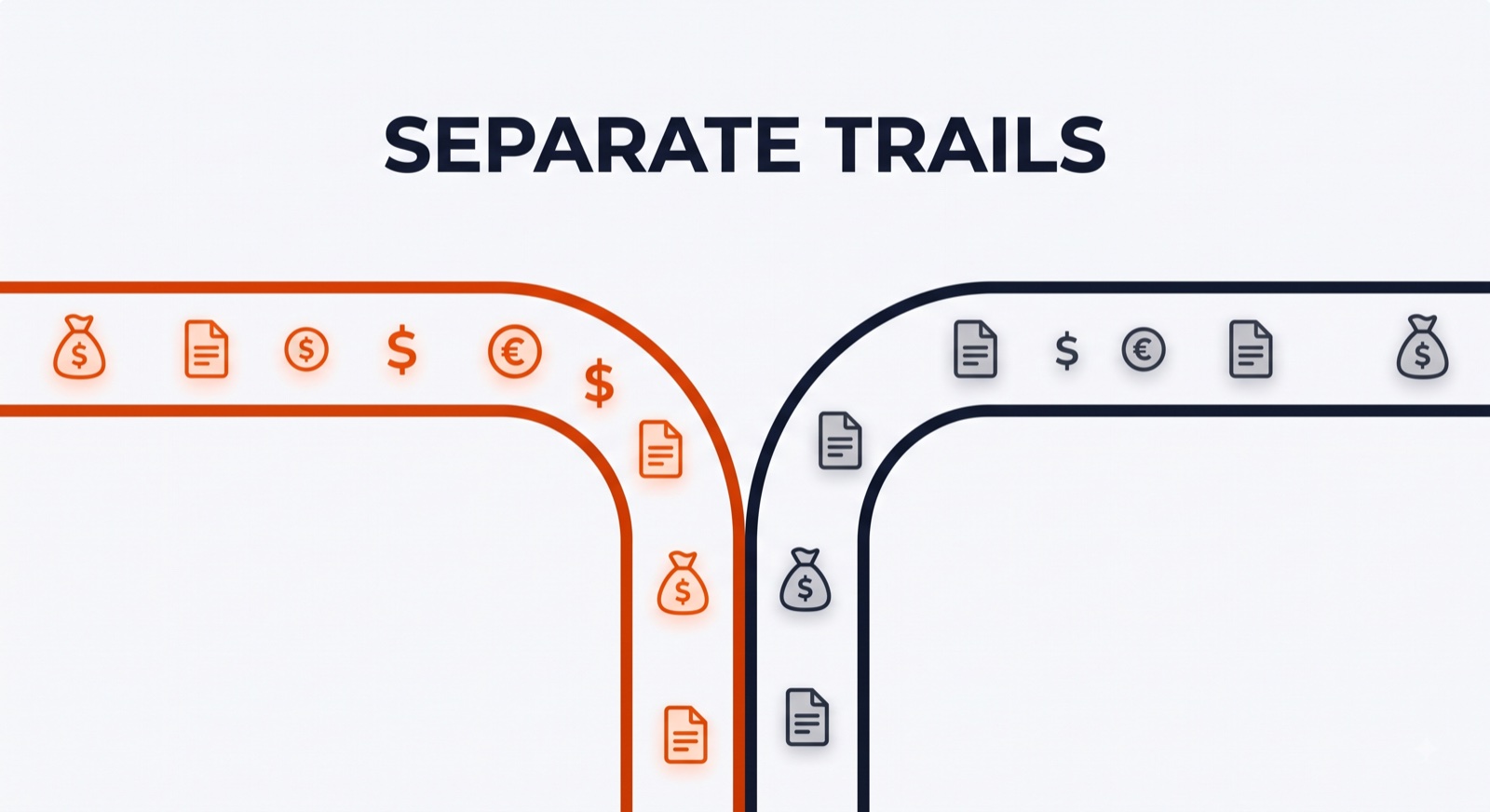
Can a Founder Use a Personal Bank Account for Business?
When you're just starting out, using your personal bank account for business can seem completely harmless. There may be only a few payments coming in, a couple of expenses going out, and opening another account feels like one more thing to deal with.
That arrangement becomes much harder to manage once the business starts moving. A client payment here, a personal purchase there, a business subscription on the same statement—and suddenly you're trying to work out which transaction belonged to the business and which one didn't.
Your Bank Statement Should Tell the Story of Your Business
A separate business bank account isn't just about looking more professional. It creates a clean financial trail that makes bookkeeping, tax filing, reconciliation and financial reporting much easier.
Think of it this way:
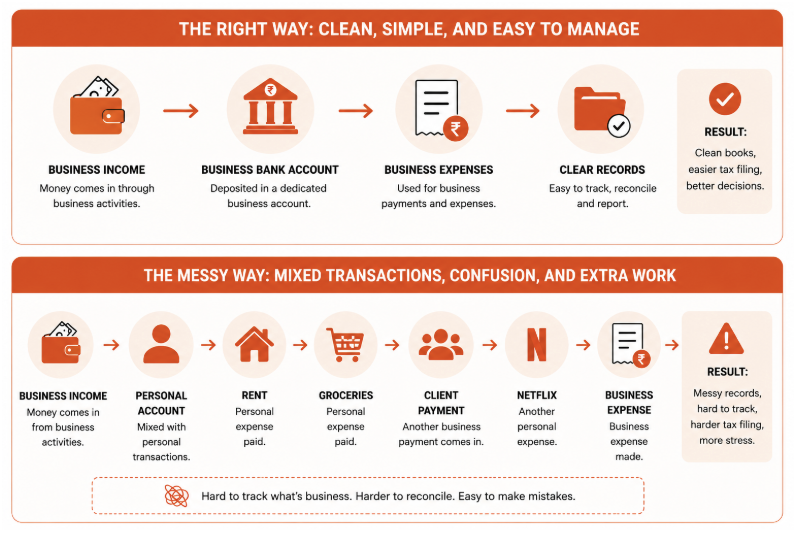
The second one may still be traceable, but it creates unnecessary work for everyone involved, especially when your CA has to reconstruct what happened months later.
For an LLP or Private Limited company, keeping business transactions separate from personal spending is particularly important because the business is a separate legal entity from its founders. A dedicated account also makes it easier to see how much money the business actually has, rather than mentally treating the company balance as your own money.
What About When You're Just Starting?
There can be situations where a business bank account hasn't been opened yet. For example, the GST registration process allows an alternate bank account to be added and updated later once the business account is available.
That doesn't mean a personal account should become the permanent operating account for the business.
Once your entity is up and running, keeping a separate account for business income and expenses is one of those small decisions that pays off repeatedly. Your books are cleaner, your accountant has fewer transactions to untangle, and you have a much clearer picture of what the business is actually earning and spending.
The goal isn't to make your finances look complicated. It's the opposite—one business, one clear money trail.