
When Does It Actually Make Sense to Hire a Chartered Accountant?
One of the biggest misconceptions around starting a business is that hiring a Chartered Accountant is something you either do immediately or not at all. In reality, most businesses fall somewhere in between. You don't need professional support for every small financial decision, but there does come a point where trying to manage everything yourself starts costing more time than it saves.
In the early days, there's a lot you can comfortably handle on your own. Recording your income and expenses, organising invoices, keeping personal and business transactions separate, and maintaining proper records are all habits every founder should build from the start. They not only help you understand your business better but also make future compliance significantly easier.
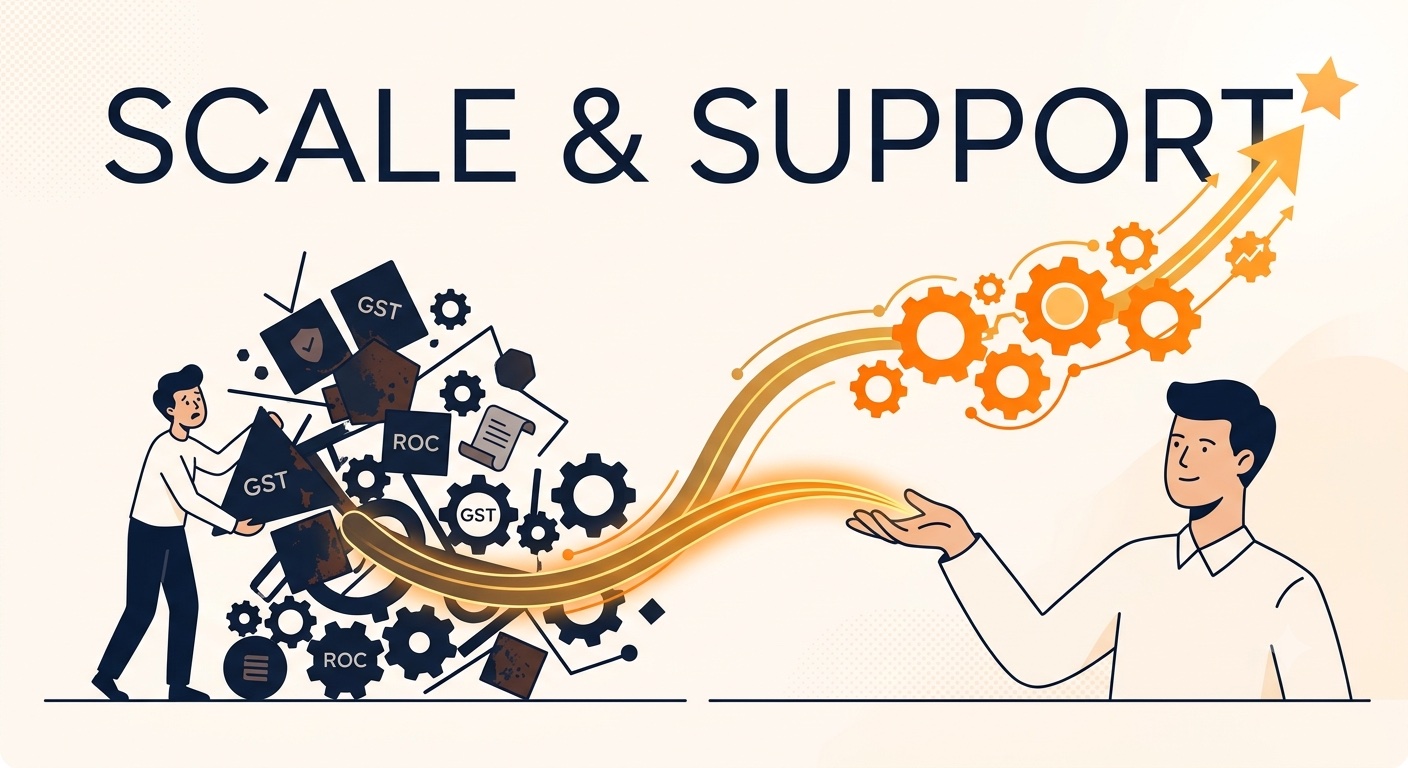
Where things begin to change is when your business starts growing. GST registrations, ROC filings, annual returns, statutory audits, tax deadlines, and changing compliance requirements don't arrive all at once, but they do begin to pile up. Individually, none of them are particularly overwhelming. Together, they become another job.
A good Chartered Accountant doesn't just “file your taxes.” They become the person making sure the financial side of your business keeps moving while you're busy growing it. Instead of worrying about whether:
- ✓Your GST return is due this week.
- ✓An ROC filing has been missed.
- ✓Your books are ready for an audit.
- ✓A notice from the Income Tax Department needs immediate attention.
- ✓A small filing mistake today could become a much bigger problem later.
...you can stay focused on building the business, meeting customers, and making decisions that actually move the company forward.
That doesn't mean every startup should hire a CA on day one. A freelancer with a handful of clients has very different requirements from a Private Limited company that's hiring employees, raising investment, or managing multiple statutory compliances.
The better approach is to recognise when compliance has stopped being an occasional task and has become an ongoing responsibility. That's usually the point where professional support starts paying for itself—not just in money saved, but in time, accuracy, and peace of mind.
Good founders don't necessarily know every tax law or compliance deadline. They simply know when it's time to stop doing everything themselves and bring in someone whose job is to make sure nothing important slips through the cracks.