
What Happens to Your Business When a Founder Leaves?
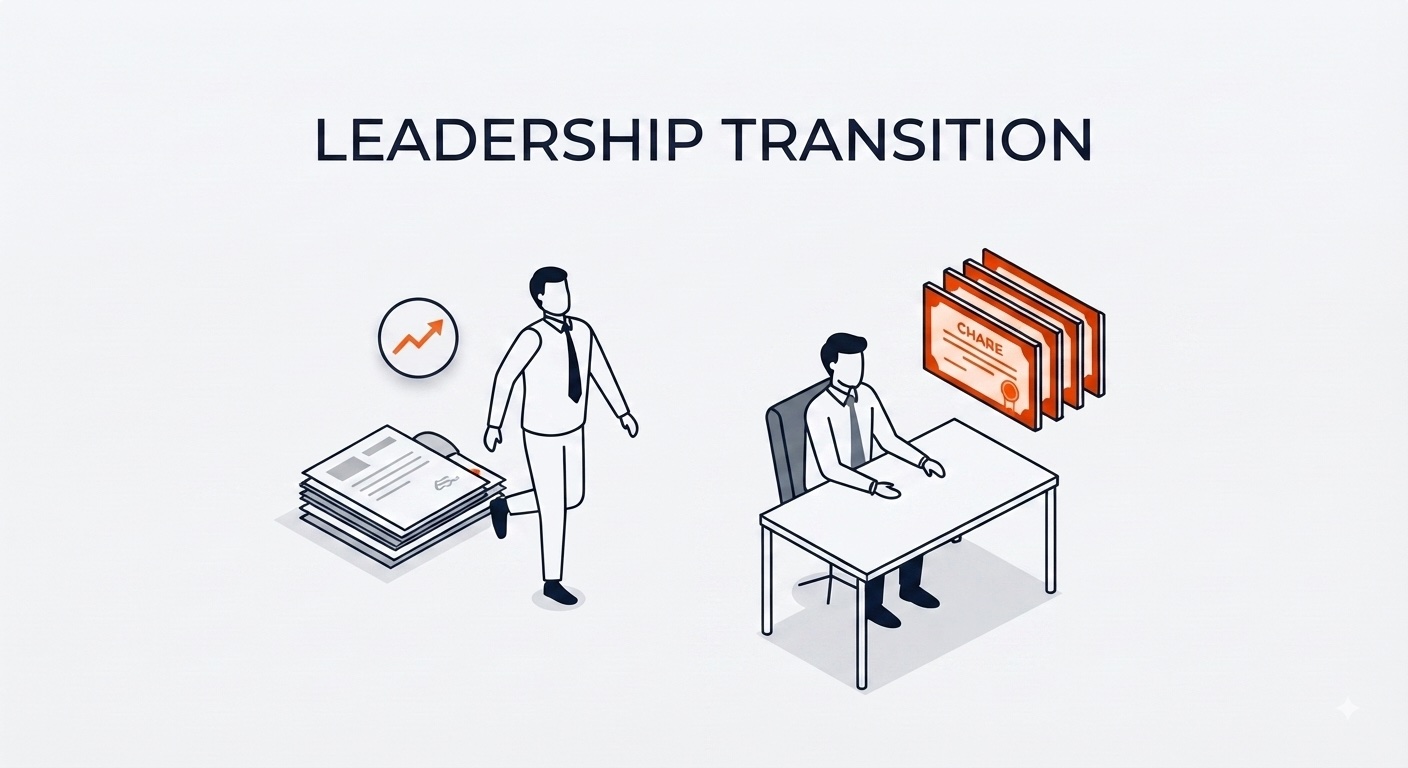
Founders don't always leave because something's gone wrong. Sometimes it's just time—a new opportunity comes along, or someone decides they're done running the day-to-day. The business usually survives that just fine. What's trickier is figuring out what happens to their role, their ownership, and all the things they were quietly holding together.
Private Limited Company: Director vs. Shareholder
Most founders don't realise this until they're actually trying to leave: in a Private Limited company, being a director and being a shareholder are two separate legal identities.
So a founder can resign as director and still keep their shares. Stepping back from the business doesn't automatically mean giving up ownership of it—that's a choice someone has to make, not something that happens on its own.
The usual sequence looks like this:
- ✓The founder resigns as director
- ✓Shares are either kept or transferred
- ✓Someone else picks up the responsibilities
- ✓The company keeps running
It reads cleanly as a list. It rarely feels that clean when you're living through it, because shares and directorship are only the legal skeleton, not the whole exit.
LLPs Work Differently
If your business is set up as an LLP, this plays out differently, because founders here are partners rather than director-shareholders.
When a partner decides to leave, the LLP Agreement is meant to already cover what happens next—their capital, their share of the profits, who takes over what they were responsible for. Plenty of LLP Agreements don't actually say much about this. When that's the case, the remaining partners end up working it all out on the fly, often while the person leaving is already mentally checked out. Not the ideal moment to be negotiating terms.
The Part No Agreement Really Covers
The paperwork is the easy part, honestly. The harder questions rarely show up in any contract:
- ✓Who takes over the clients this person personally brought in?
- ✓Who manages the vendors they've been dealing with for years?
- ✓Who gets access to the accounts and logins only they control?
- ✓What happens to whatever was mid-progress when they left?
- ✓How much of the business was really running out of one person's head?
Founders tend to picture their own exit as shares, signatures, and a resignation letter. The business has a much longer handover list, most of it never gets written down until someone's already gone.
Plan This Before You Need To
A solid founders' agreement, shareholders' agreement, or LLP Agreement won't make an exit painless. Nothing really does. But it does mean you're not inventing the rules on the spot while someone's halfway out the door. Settle the terms while everyone's still on the same side of the table.
This article is for general information and isn't legal or financial advice. If you're planning a founder exit, or trying to get ahead of one, it's worth talking to a professional to get your agreements in order.